


Flow Measurement
Instruments used to measure the mass and/or volumetric flow-rates of dry gases and liquids ranging from 0.5 mL/min to 5000 L/min.
Rotameters
✕A rotameter is a flow measurement device used for measuring the flow rate of a fluid (liquid or gas) passing through an enlarged vertical pipe (typically a cone-shaped tube). It operates on the variable area principle, where the position of a float within the tube directly indicates the flow rate.
• Simple, robust, and cost-effective.
• Do not require electrical power (in their mechanical version).
• Ideal for low flow rates and fixed installations
-
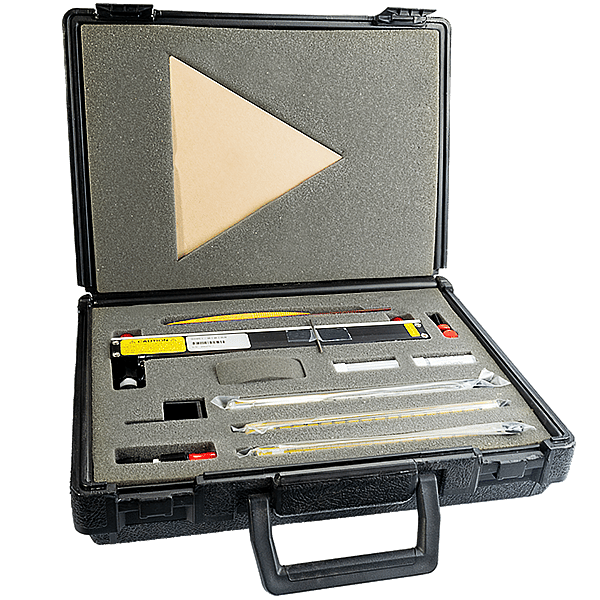 Rotameter Kit
Rotameter Kit with flow tubes and floats
- Aluminum flow meter kit
- Stainless steel flow meter kit
- PTFE flow meter kit
-
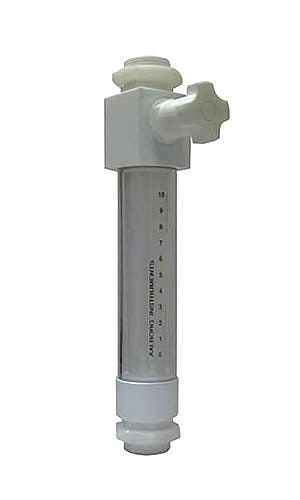 Model F PTFE flow meters
Model F PTFE single flow tube in-line rotameter
-
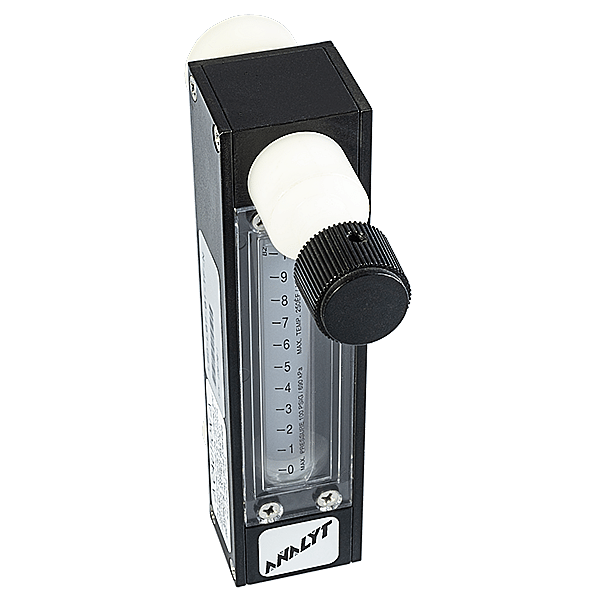 Model L PTFE-PFA flow meters
Model L PTFE-PFA for low to medium flow range measurements
-
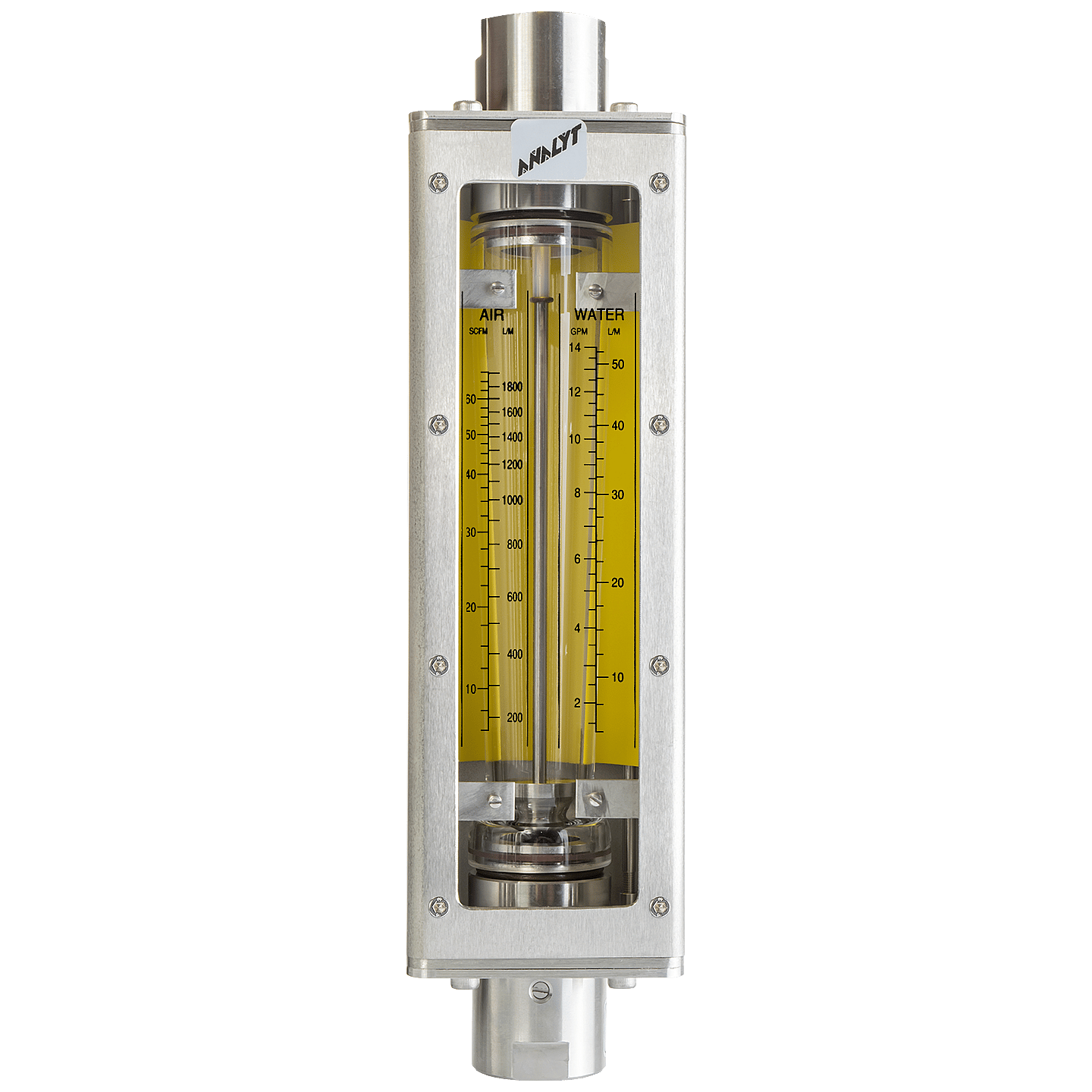 Model M industrial flow meters
Heavy duty stainless steel industrial rotameter for air and water
-
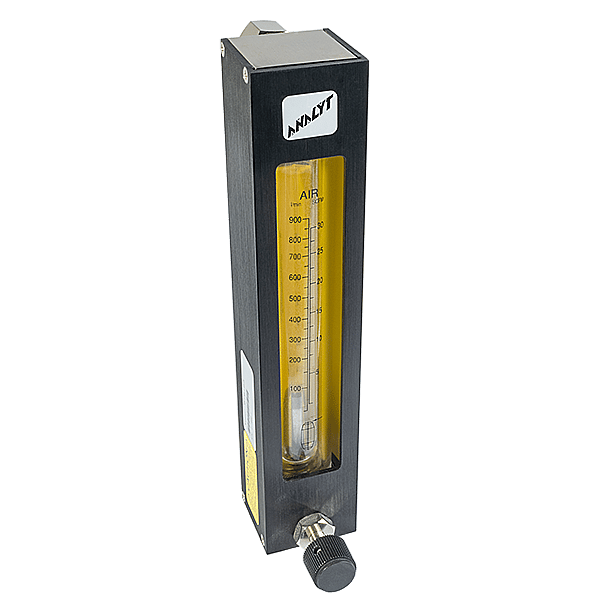 Model V PTFE medium range flow meters
model V PTFE single flow tube rotameter for medium flow rate measurement
- Dual rotatable direct reading scales for air and water
- Vertical in-line or panel mount versions available
- flow ranges from 3 to 4 LPM water and 100 to 625 SLPM air
-
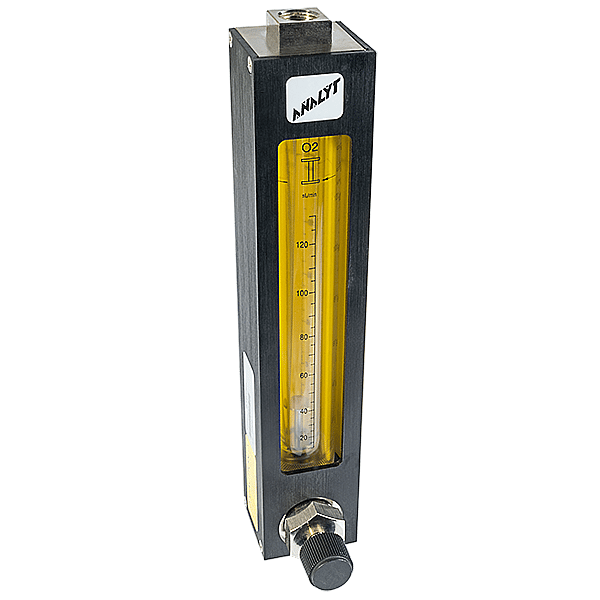 Model xV multi-gas mid-range flow meters
Model V Rotameter: Medium flow, brass/stainless steel, multi-gas with rotatable SCFM/SLPM scales. Compact, versatile for vertical/panel mount, metric/Imperial graduations.
-
Model V medium range flow meters
A brass/stainless steel rotameter for medium flow rates, featuring dual scales, metric/Imperial graduations, and flexible mounting options. Covers 4-20 LPM water, 140-900 SLPM air.
-
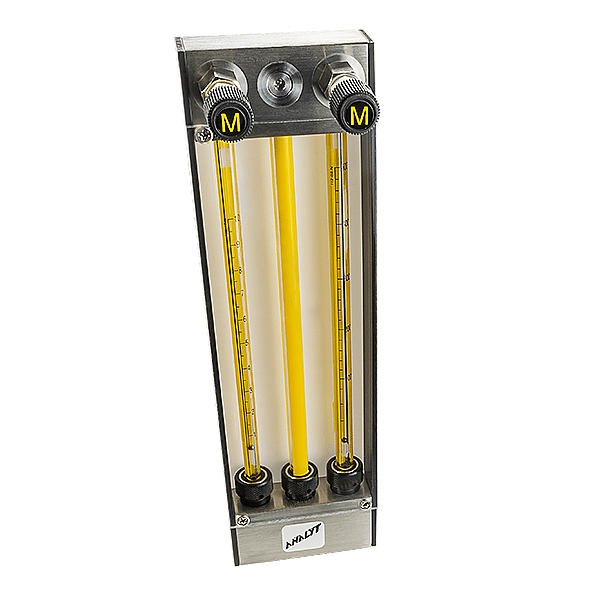 Model G gas proportioner meters
Model G low flow rate gas blending and measurement
- Blending of two or three gases
- interchangeability of flowtubes and floats
- Millimeter scale
- Size : 150 mm
- Optional CV or MFV valve
-
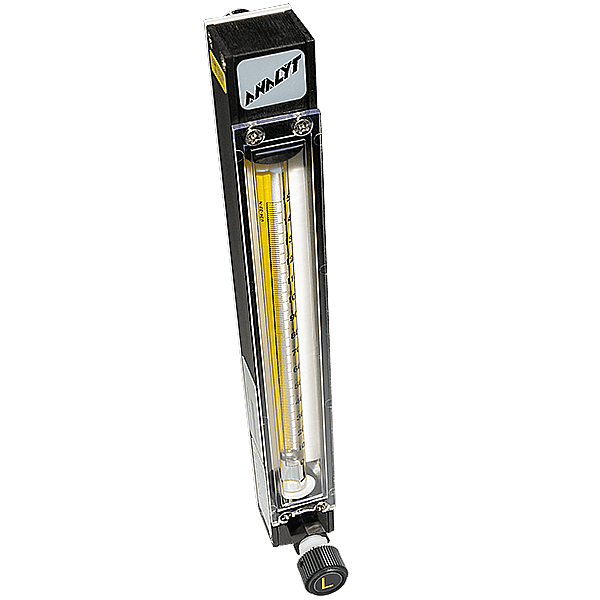 Model S flow meters
Model S single flow tube rotameter
- rib-guided or fluted metering tubes facilitate stable and accurate readings
- exclusive design simplifies installation and replacement of tubes
- interchangeability of flowtubes and floats
-
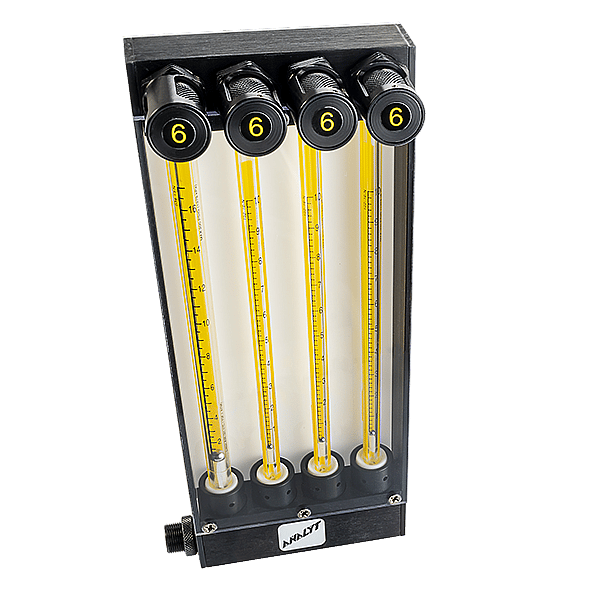 Model Tx flow meters
Model Tx PTFE/Glass multiple flow tube rotameter
- interchangeability of flowtubes and floats
- Direct reading or millimeter scale
- Size : 65mm or 150 mm
- Optional CV or HRT valve
-
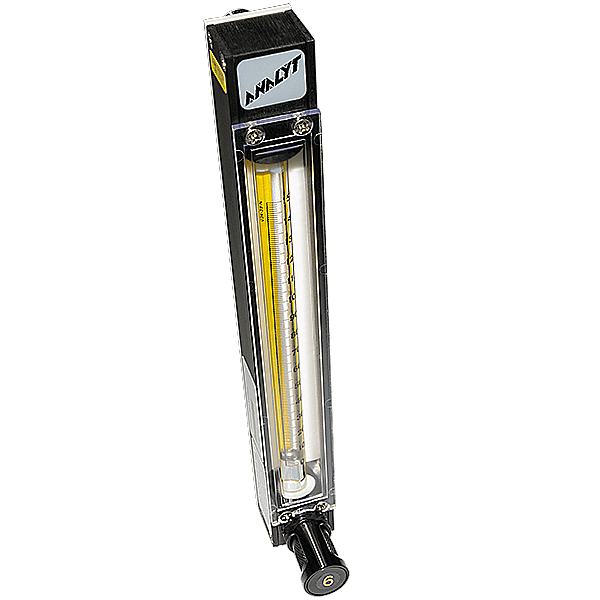 Model T flow meters
Model T PTFE/Glass flow tube rotameter
- rib-guided or fluted metering tubes facilitate stable and accurate readings
- chemically inert wetted parts
- interchangeability of flowtubes and floats
- Direct reading or millimeter scale
-
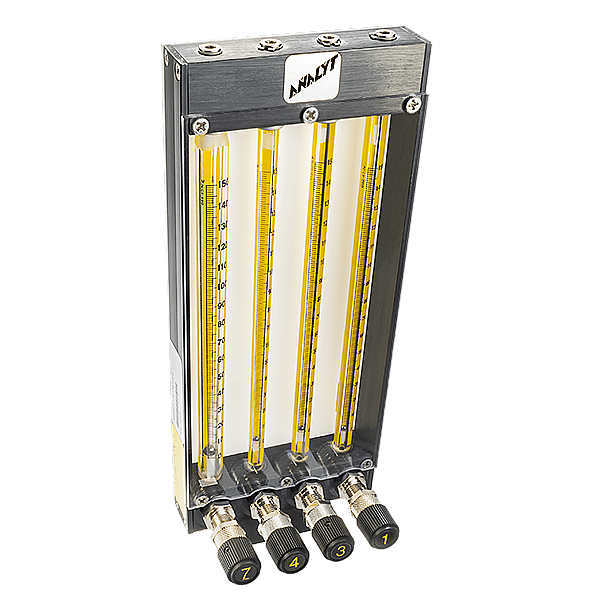 Model Px flow meters
Model Px multiple flow tube rotameter
- Multiple rib-guided or fluted metering tubes facilitate stable and accurate readings
- interchangeability of flowtubes and floats
- Direct reading or millimeter scale
-
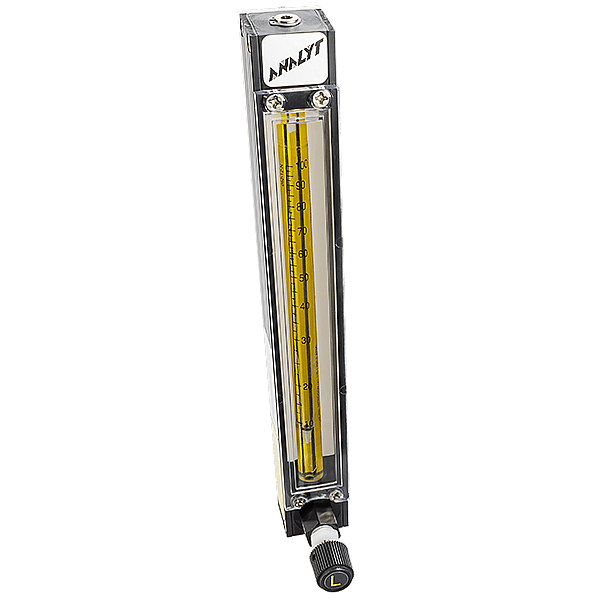 Model P flow meters
Model P flow tube rotameter
- rib-guided or fluted metering tubes facilitate stable and accurate readings
- Direct reading or millimeter scale
- Size : 65mm or 150 mm
Laminar Mass Flow meters
✕Laminar mass flow meters calculate mass flow by measuring the pressure drop across laminar flow elements.
Operating Principle
These flow meters are equipped with a laminar restriction element through which the fluid flows in a laminar regime. When the gas passes through this element:
• a pressure drop occurs between the inlet and outlet of the laminar element,
• this pressure drop is proportional to the volumetric flow rate in the laminar regime,
• knowing the temperature and pressure of the gas, the mass flow rate can be calculated accurately.
Advantages
• Very good accuracy even at low flow rates,
• Fast and linear response in the laminar regime,
• Low sensitivity to gas composition (if properly calibrated).
-
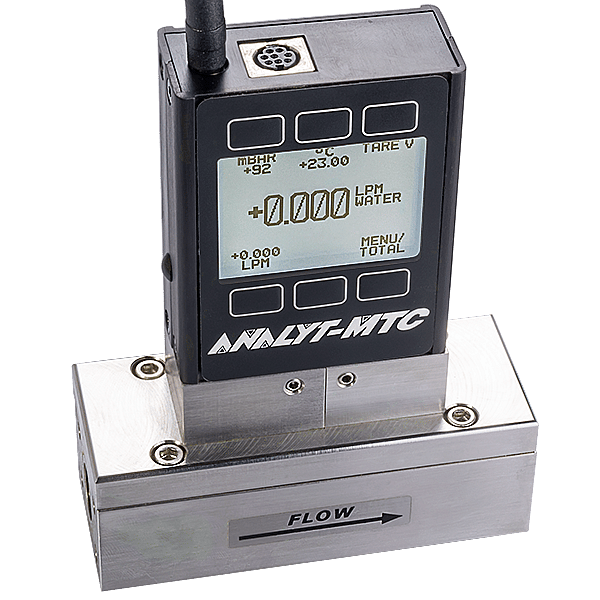 358 Series L Liquid flow meters
Multi-parameter laminar liquid flow meter.
-
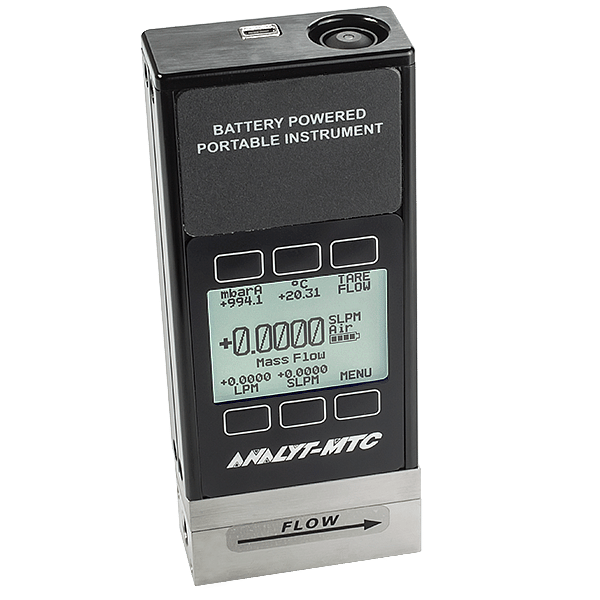 358 Series MLWB mass flow meters
High accuracy, multi-parameter portable low pressure drop laminar mass flow meter.
-
 358 Series MLW mass flow meters
High accuracy, multi-parameter, low pressure drop laminar mass flow meter.
-
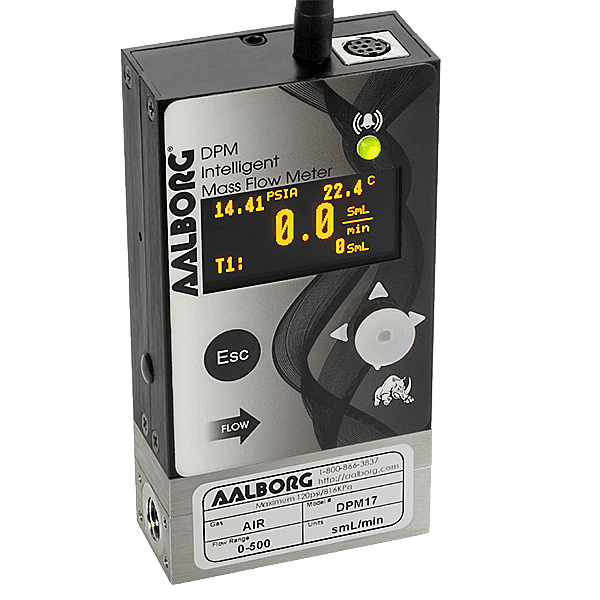 DPM Mass flow meter
Precision digital mass flow meter with Multi-Gas functionality, Temperature and Pressure.
-
358 Series M mass flow meters
High accuracy, multi-parameter laminar mass flow meter.
-
358 Series MB mass flow meters
Battery powered, laminar mass flow meter.
Thermal Mass Flow Meters
✕Thermal mass flow meters utilize the thermal properties of gases to directly measure the mass flow rate of a gaseous fluid.
• Direct measurement of mass flow (no need to correct for temperature or pressure).
• Ideal for pure gases.
• Very few moving parts → reduced maintenance.
-
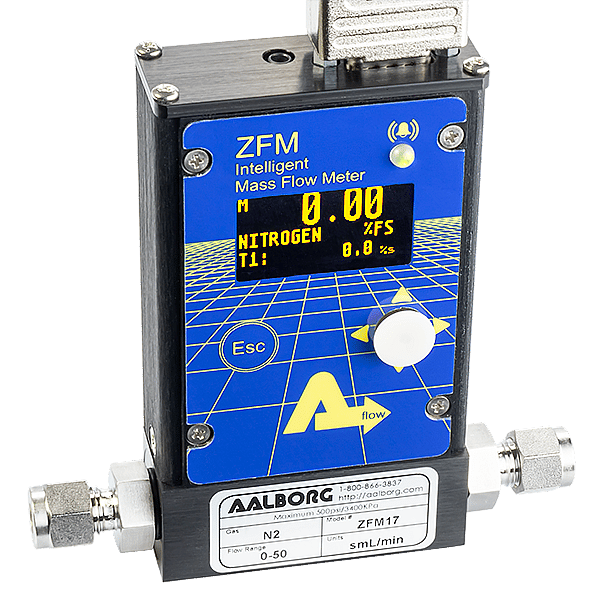 ZFM digital mass flow meter
High accuracy aluminum or stainless steel thermal mass flow controllers
-
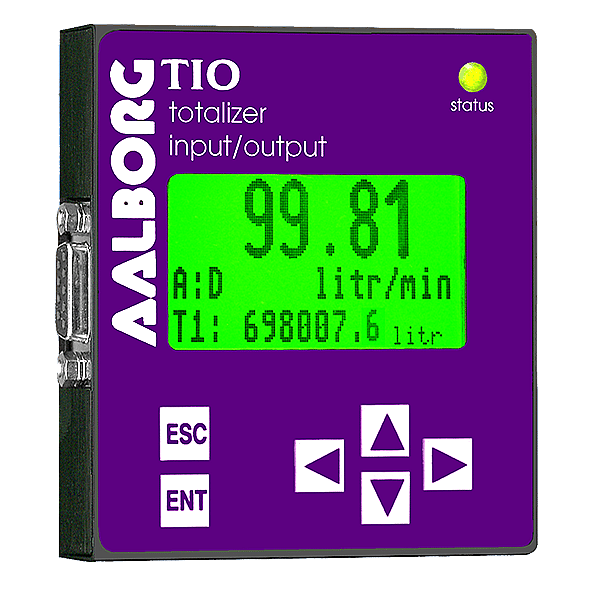 TIO Accessory Totalizer Input/Output
TIO Accessory for GFM/GFC
-
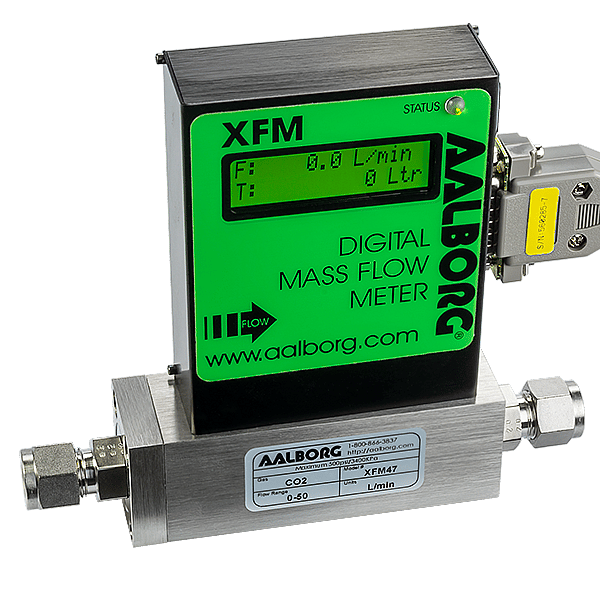 XFM
XFMXFM low priced aluminum or stainless steel digital thermal mass flow meters
-
 GFM
GFMGFM low priced aluminum or stainless steel thermal mass flow meters